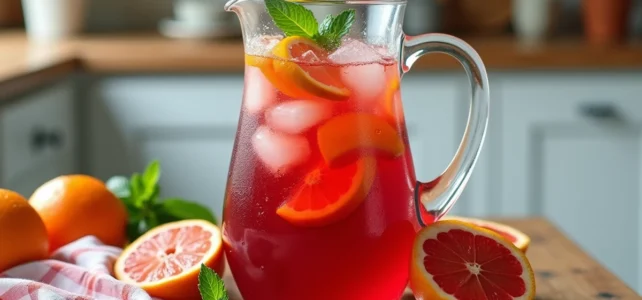
You prepared a large bowl of punch for a party, and there’s half left. The natural reflex would be to pour it into a bottle and slide it into the freezer. But homemade punch, with its fresh fruits, juice, and sometimes coconut milk, is not just a flavored ice cube. Freezing homemade punch is possible, provided you understand what really happens to your drink once the temperature drops below zero.
Microbiological safety of punch after freezing
Have you ever noticed that punch left out for a few hours at room temperature doesn’t change in smell or taste? That’s precisely the trap. Pathogenic bacteria can proliferate without altering the appearance of the punch, making the “I smell, I taste” method completely ineffective for judging its safety.
Many believe that rum protects the drink. In reality, alcohol alone is not enough to ensure the preservation of a punch containing fresh fruits, unpasteurized juices, or coconut milk. These ingredients create a favorable environment for microbial growth, even in the presence of strong alcohol.
Freezing stops the multiplication of bacteria, but it does not destroy them. If your punch has been left out too long before being frozen, the microorganisms present will resume their activity as soon as it thaws. To know precisely whether homemade punch can be frozen safely, you need to think like in collective catering: the cold chain starts from the moment of preparation, not when you decide to store the leftovers.
Punch in the freezer: what changes in the glass
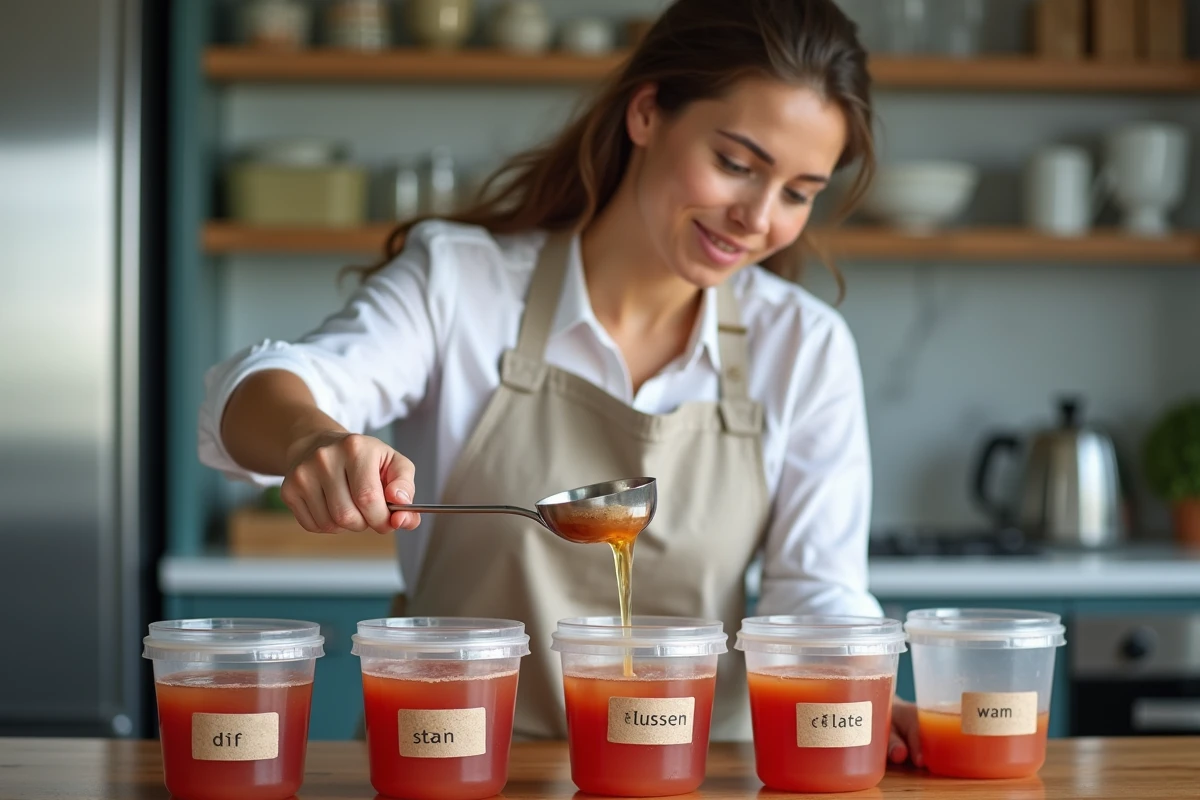
A punch does not freeze uniformly. The water contained in the fruit juices solidifies first, while the alcohol remains liquid for longer. At the time of thawing, this separation causes an imbalance.
The most common result: a diluted drink that has lost most of its fruity flavors. The volatile aromas of citrus and tropical fruits deteriorate with prolonged cold. The sugar redistributes unevenly, resulting in a punch that is sometimes bland and sometimes too sweet depending on the sip.
Particular case of coconut punch
Coconut milk does not freeze well. Its fats separate from the aqueous phase, creating a grainy texture upon thawing. Even with vigorous stirring, you won’t regain the original creaminess. If your recipe contains coconut milk, it’s better to freeze it separately and add it at the last moment.
The fruits: to be removed before freezing
Fresh fruit pieces become mushy and spongy after freezing. They release their water as they thaw, further diluting the drink. Always remove them before placing your punch in the freezer, and add fresh fruits at the time of serving.
Freezing protocol inspired by catering
In collective catering, you never freeze a dish that has been left at room temperature during service. The same principle applies to your party punch. Here’s a simple and reliable protocol:
- Refrigerate your punch immediately after preparation, without waiting for it to sit out during the evening. A punch left on a table for several hours should not be frozen
- Remove all fruit pieces and solid elements before transferring the drink into freezer-safe containers
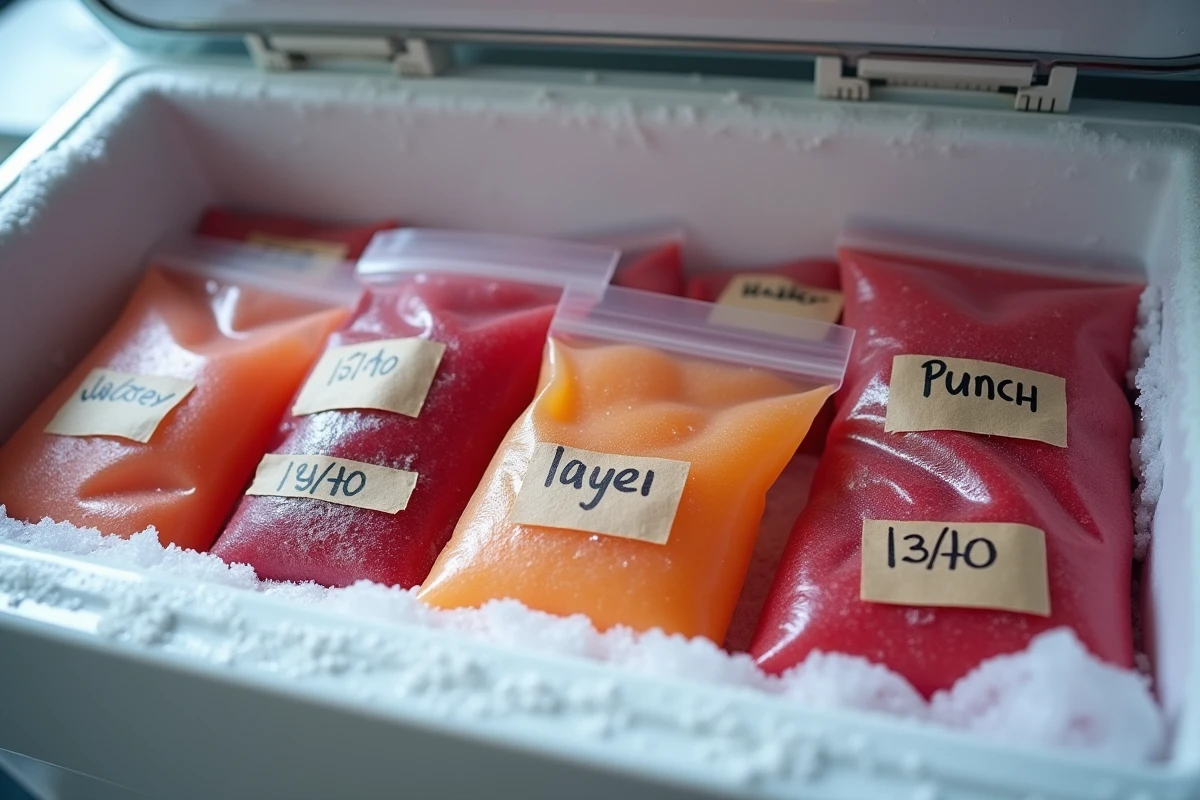
- Use plastic bottles or airtight bags, leaving some space for the liquid to expand during freezing
- Label each container with the preparation date to avoid exceeding a reasonable storage time in the freezer
This protocol limits oxidation and reduces the risk of microbiological contamination. It also allows you to portion your punch, avoiding the need to thaw the entire batch just to serve one glass.
Batch freezing: the best alternative for large parties
Rather than freezing an entire bowl of finished punch, a much more effective approach is to prepare and freeze only the concentrated base. Specifically, you mix the rum, sugar syrup, and possibly spices, then freeze this mixture in bags or bottles.
On the day of the party, you take your bags out a few hours before serving. You add the fresh fruit juices, coconut milk, and fruit pieces at the last moment. This method offers several concrete advantages:
- The flavors of the fresh juices remain intact since they have never been frozen
- You control the dilution at the time of serving, adjusting the amount of ice or juice according to taste
- Transport is simplified: frozen bags in a cooler take up less space than a fragile bowl
- You can prepare your bases several weeks in advance without loss of quality
This batch technique is common among professional bartenders who prepare cocktails for large events. It fits perfectly into the context of a family party or wedding.
Thawing punch: mistakes to avoid
Thawing in the refrigerator is the only recommended method. Leaving a bottle of punch to thaw on the countertop for hours recreates exactly the conditions conducive to bacterial growth.
Never refreeze a punch that has already been thawed. Each freeze-thaw cycle degrades the aromas and multiplies health risks. If you’ve taken out too much punch, keep the excess in the refrigerator and consume it quickly.
After thawing, taste the punch and adjust. The cold dulls the perception of sweetness and acidity, so your drink will likely need a splash of lime juice or a touch of syrup. Stir thoroughly to homogenize the mixture, as the separation between water and alcohol is almost systematic.
Homemade punch can be frozen, but not under just any conditions. The difference between a tasty frozen punch and a bland glass lies in two simple choices: freeze the base rather than the finished product, and respect the cold chain from the moment of preparation. Your guests won’t notice the difference, and that’s precisely the goal.