
Cat hair in the lungs raises a recurring question among cat owners. The real risk does not come so much from the hair itself, which is a biologically inert keratin fiber, but from the allergenic micro-particles that cling to it. Understanding this mechanism allows us to assess the true respiratory dangers and target effective preventive measures.
Cat hair and allergen Fel d 1: what each one actually carries
The confusion between hair and allergen fuels most misconceptions. Whole hair, with a diameter of several tens of micrometers, is largely filtered by the upper airways (nose, trachea). The cilia and nasal mucus are sufficient to trap the hair before it reaches the lungs.
The problem lies elsewhere. The protein Fel d 1, produced by the cat’s saliva and sebaceous glands, settles on the fur when the animal grooms itself. When the hair dries and detaches, microscopic particles laden with Fel d 1 disperse into the surrounding air. These particles, much finer than the hair, remain suspended for a long time and penetrate deeply into the bronchial tree.
In summary, as British & Co advises, the true vector of respiratory risk is this invisible allergenic load, not the visible hair on the couch.
| Element | Approximate Size | Filtered by Nose/Trachea | Reaches Bronchioles |
|---|---|---|---|
| Whole Cat Hair | Several tens of µm | Yes, in most cases | Rarely |
| Scale (dead skin) | Variable, often < 10 µm | Partially | Possible |
| Particle Charged with Fel d 1 | Several µm or less | Weakly | Yes, deep penetration |

Rhinitis, asthma, edema: respiratory conditions related to cat allergens
In a sensitized person, repeated inhalation of Fel d 1-laden particles triggers an inflammatory cascade. The most common manifestations follow a fairly clear gradation.
- Allergic rhinitis: series of sneezes, nasal congestion, clear discharge, and a scratchy throat sensation. This is the most common form and often the first to manifest.
- Associated conjunctivitis: red eyes, tearing, itchy eyes, frequently combined with rhinitis.
- Allergic asthma: dry cough, wheezing, chest tightness. Attacks can occur a few minutes after exposure or gradually develop in cases of chronic exposure.
- Angioedema: rapid swelling of the facial tissues and airways. This reaction remains rare but constitutes a medical emergency.
Not all asthmatics react to cat allergens. However, for those who are sensitized, chronic exposure in the home worsens the frequency of exacerbations. Daily contact maintains a background inflammation that makes the bronchi more reactive to other irritants (pollution, smoke, viral infections).
Immunocompromised individuals and pre-existing respiratory diseases
The profile of the resident radically changes the level of risk. For a healthy, non-allergic person, living with a cat does not pose a measurable lung problem.
The situation differs for immunocompromised individuals or those with a severe pre-existing respiratory disease. In these patients, chronic exposure to cat allergens can increase the intensity and frequency of bronchitis episodes or asthma attacks. A consultation with an allergist or pulmonologist can then assess whether cohabitation remains compatible with their health status.
Children exposed early to a cat may develop a reduced risk of allergies, a phenomenon studied from the perspective of immune tolerance. This finding should not be generalized: it depends on the child’s genetic background and does not apply to households where a member already suffers from severe asthma.
Reducing allergenic load in the home: effective levers
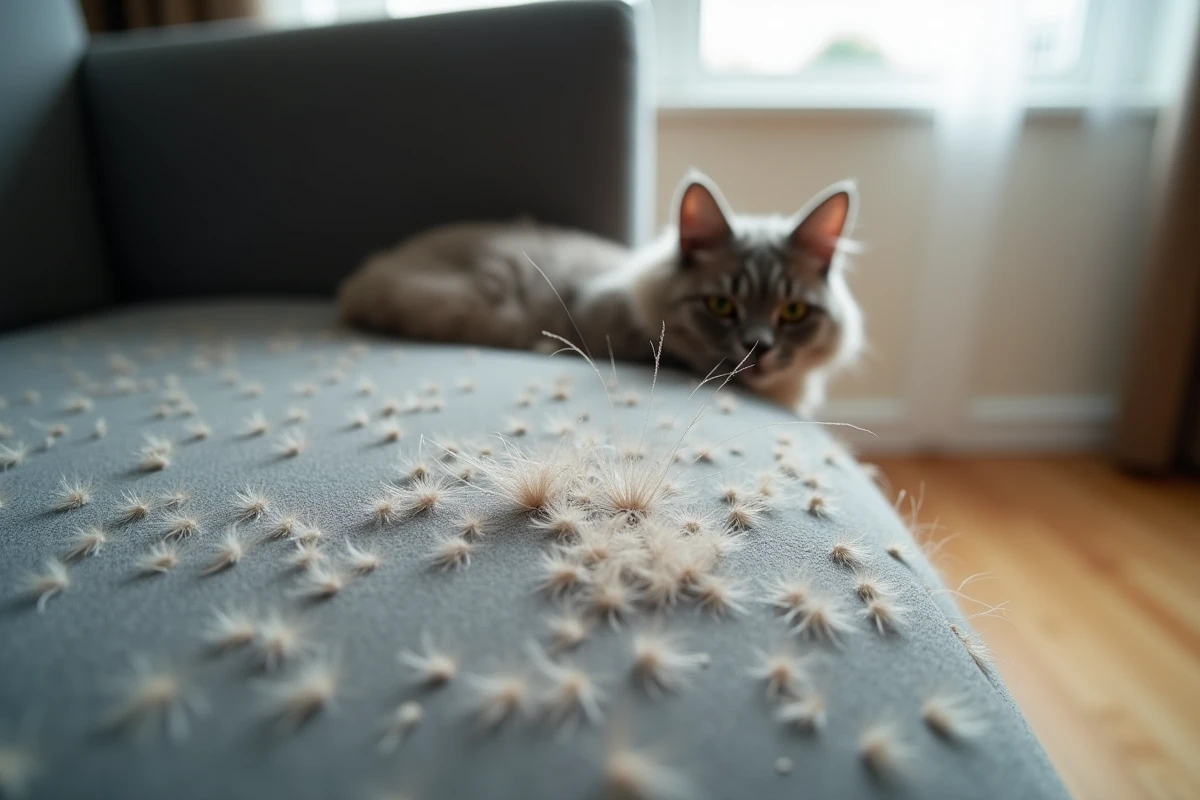
Focusing on visible hair (vacuuming, adhesive rollers) is not enough. Fel d 1 particles settle on textiles, walls, and smooth surfaces, then are re-suspended by air movements. The effective strategy targets this invisible load.
- Ventilate the home daily, for at least ten minutes, to renew indoor air and dilute the concentration of allergens.
- Regularly wash household linen (sheets, covers, throws) at high temperatures to eliminate accumulated Fel d 1 deposits.
- Exclude the cat from the bedroom, an area where prolonged nighttime exposure maintains inflammation of the airways.
- Delegate the cat grooming to a non-allergic person, in a ventilated room or outside, to limit the dispersion of scales.
These environmental control measures are now the main lever recommended by allergists, more than the definitive removal of the animal. Reducing Fel d 1 in indoor air significantly decreases symptoms in the majority of sensitized patients.
Immunotherapy and research avenues
Desensitization (specific immunotherapy) remains an option for individuals whose symptoms persist despite environmental measures. The principle is to gradually expose the immune system to increasing doses of allergen to mitigate the inflammatory response. Approaches targeting the Fel d 1 protein directly are under development and considered a realistic medium-term prospect.
The real risk of cat hair in the lungs thus boils down to an issue of allergenic particles, not fibers. A well-ventilated home and targeted hygiene practices allow, in most cases, to coexist with a cat without compromising respiratory health. For at-risk profiles, the advice of a specialist remains the starting point for any decision regarding the animal.