
A decree, a list, and at the end, a potential dispute. This is how a simple light bulb change can become a real case study in furnished rentals. Between regulatory texts and the reality of housing, the line between the tenant’s duties and the landlord’s responsibilities is not always as clear as one would hope. And behind every light fixture, there are very concrete questions that arise in the daily lives of both parties.
Changing light bulbs in furnished rentals: a common question for tenants and landlords
In furnished rentals, the replacement of light bulbs is a recurring topic during exchanges between tenants and landlords. The law, however, leaves no room for doubt: the routine maintenance of the property falls to the tenant. The replacement of light bulbs in furnished housing is clearly listed among the tenant’s repair responsibilities, alongside changing fuses or maintaining switches. A well-drafted lease also reminds of this rule. If the electrical installation shows serious defects or signs of advanced wear, the landlord’s responsibility may be engaged.
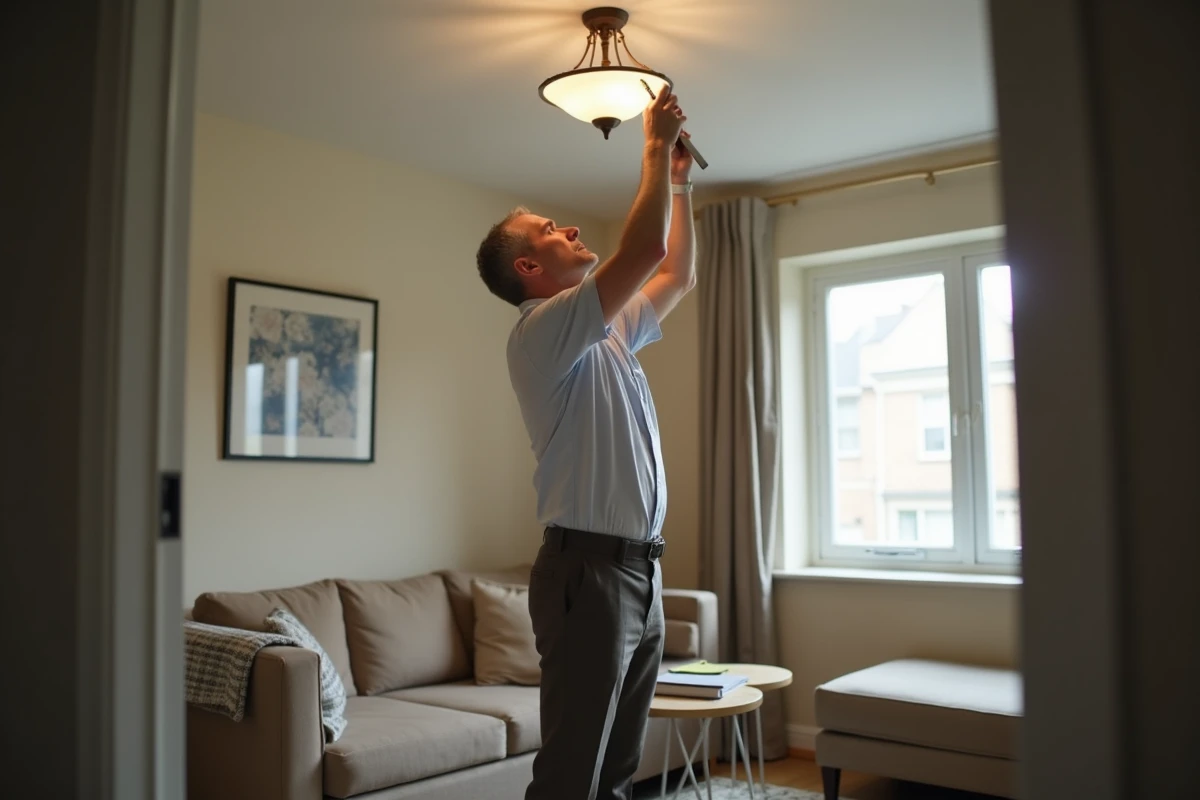
Yet, reality is never that simple. Take the example of a ceiling light placed more than three meters off the ground, rare bulbs that are hard to find in stores, or an aging electrical installation: these are all situations that challenge the division of tasks. At the exit inventory, tensions can sometimes rise, with each party trying to prove they have fulfilled their obligations. The tenant must demonstrate that they have replaced what needed to be replaced, while the landlord focuses on checking the condition of the equipment.
To prevent these details from igniting the debate, a few points of vigilance are necessary:
- The tenant is responsible for replacing standard, easily accessible, and common light bulbs.
- The landlord must intervene if the installation is defective or poses an electrical risk.
- The entry and exit inventories attest to the presence or absence of functional bulbs.
A precise lease, detailed inventories, and regular dialogue help reduce tensions related to light bulb replacement in furnished rentals. Those wishing to explore the topic in depth will find in the file “replacement of light bulbs in furnished housing” a comprehensive analysis of each party’s respective roles.
Who is responsible for replacing light bulbs in a furnished rental? What the law and practice say
The question of who is responsible for replacing light bulbs in a furnished rental is not just a matter of logistics: it is a fundamental pillar of the relationship between tenant and landlord. The legal framework is unambiguous: all minor repairs, including the replacement of light bulbs, are the tenant’s responsibility. This principle, established by the decree of August 26, 1987, applies to all furnished rental agreements. For its part, the landlord commits to providing a property equipped with a functional electrical installation and working light fixtures at the time of key handover.
During the occupancy, the tenant ensures the maintenance of burnt-out bulbs, whether they are in a ceiling fixture, a bedside lamp, or a spotlight. This responsibility is part of the routine of the rented property. The inventories, conducted at the beginning and end of the lease, serve as arbiters: any missing or defective bulb noted during these inspections can justify a deduction from the security deposit if the replacement has not been carried out.
- The tenant takes care of changing standard bulbs.
- The landlord steps in for electrical faults or structural failures.
- The lease must include clear terms regarding maintenance, reiterating the precise list of repairs the tenant is responsible for.
The reality on the ground confirms this division: most conflicts arise from a contract that is too vague or a poorly conducted inventory. Being attentive during the drafting and signing process is a safeguard against many disagreements regarding the maintenance and replacement of electrical equipment.
Particular cases, exceptions, and tips to avoid misunderstandings between landlord and tenant
In practice, certain cases deviate from the standard model and complicate the management of light bulb replacement in furnished rentals. When electrical equipment shows signs of aging, the landlord’s responsibility comes into play: they must ensure that the installation complies with current standards. This moves beyond routine maintenance into the realm of more significant repairs, which cannot fall to the tenant.
Other circumstances may arise. Water damage, a fire, or an external power surge can damage light fixtures. In these situations, the tenant’s home insurance comes into play, but depending on the nature of the incident, the landlord’s insurance may also be called upon. An electrical diagnosis conducted before signing the lease provides a solid foundation for limiting future disputes. It allows for differentiation between simple wear and tear and structural defects or negligence.
To clarify responsibilities and prevent disputes, it is advisable to include certain elements in the contract:
- Explicitly define in the lease the division of responsibilities related to the maintenance and repair of light bulbs.
- Include a clause regarding the potential aging of the electrical installation.
- Attach a detailed inventory to the rental, listing all present light fixtures.
In renovated properties or those concerned about their energy impact, the use of LED or low-consumption bulbs is becoming increasingly necessary. The landlord may require their use to reinforce energy-saving logic. This requirement should be clearly stated in the lease to avoid any future disputes.
Ultimately, every replaced or forgotten bulb tells a story of role-sharing. Sometimes, a detail is enough to spark dialogue or, conversely, conflict. Between vigilance and clarity, the light remains within reach for those who take the time to clarify the rules of the game.