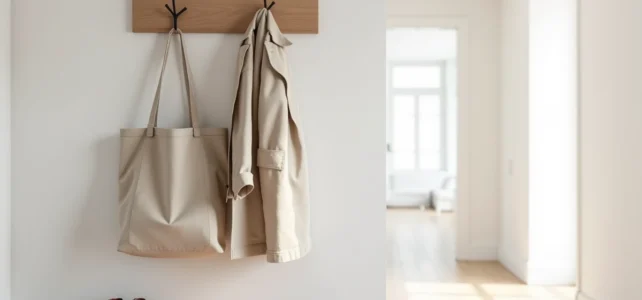
A wall hook supports between two and eight kilograms depending on its mounting method, material, and the type of wall it is attached to. Choosing a model suitable for your interior requires considering these three variables, not just selecting a shape that you like. The performance gap between a hook screwed into a wooden stud and the same hook glued to plaster can render the accessory unusable in a matter of weeks.
Mounting on lightweight partition: the parameter that decor guides overlook
The majority of homes built or renovated in the last twenty years use plasterboard partitions. The Agence Qualité Construction reports, in its report “Pathologies of Secondary Works in Housing” (2023 edition), a notable increase in issues with lightweight partitions related to the mounting of storage elements (including hooks and coat racks) without appropriate anchors or reinforcements.
Specifically, a wall hook fixed with a simple screw into BA13 without an expansion anchor eventually tears the board under the cumulative weight of wet coats. The most common damage is not the fall of the hook, but the plaster chipping that requires wall repair.
Before purchasing a model, identify your support. A brick, concrete, or stone wall allows for direct mounting with a standard anchor. A plasterboard partition requires a toggle or Molly anchor, calibrated according to the expected weight. If you are targeting a specific location, you can learn more on Wiki for Home to identify the appropriate mounting type for each wall.
Materials for wall hooks: wood, metal, and resin versus actual use
The material determines the strength, maintenance, and integration into the decor. Three families cover almost the entire range.
| Material | Moisture Resistance | Suitable Rooms | Maintenance |
|---|---|---|---|
| Solid wood (oak, beech) | Medium (sensitive without treatment) | Entry, bedroom, office | Oiling or waxing once or twice a year |
| Metal (steel, brass, aluminum) | High (depending on anti-corrosion treatment) | Bathroom, kitchen, entry | Simple wiping, checking screws |
| Resin or ABS plastic | High | Bathroom, laundry room, children’s room | Cleaning with soapy water |
FSC or PEFC certified wood is gaining visibility in the specifications for eco-designed housing. The “Sustainable Habitat – Collective Housing” reference framework from the Île-de-France Region (2022 version) recommends the use of small interior equipment made from sustainably managed forests, including for wall-mounted storage accessories.
Metal remains the most versatile choice for humid areas. A powder-coated steel model withstands water splashes well. In contrast, raw brass, favored for its vintage style, oxidizes quickly in a poorly ventilated bathroom.
Wall hook and decoration style: three successful combinations
The design of a hook is not limited to its color. The shape of the hooks, the profile of the plate, and the surface finish direct the object towards a specific decorative style.
Scandinavian or minimalist interior
Light wood ball hooks (birch, ash) with a thin cylindrical rod integrate without visual competition with the rest of the furniture. A discreet hook disappears when not loaded, preserving the clean line of the wall.
Industrial decoration
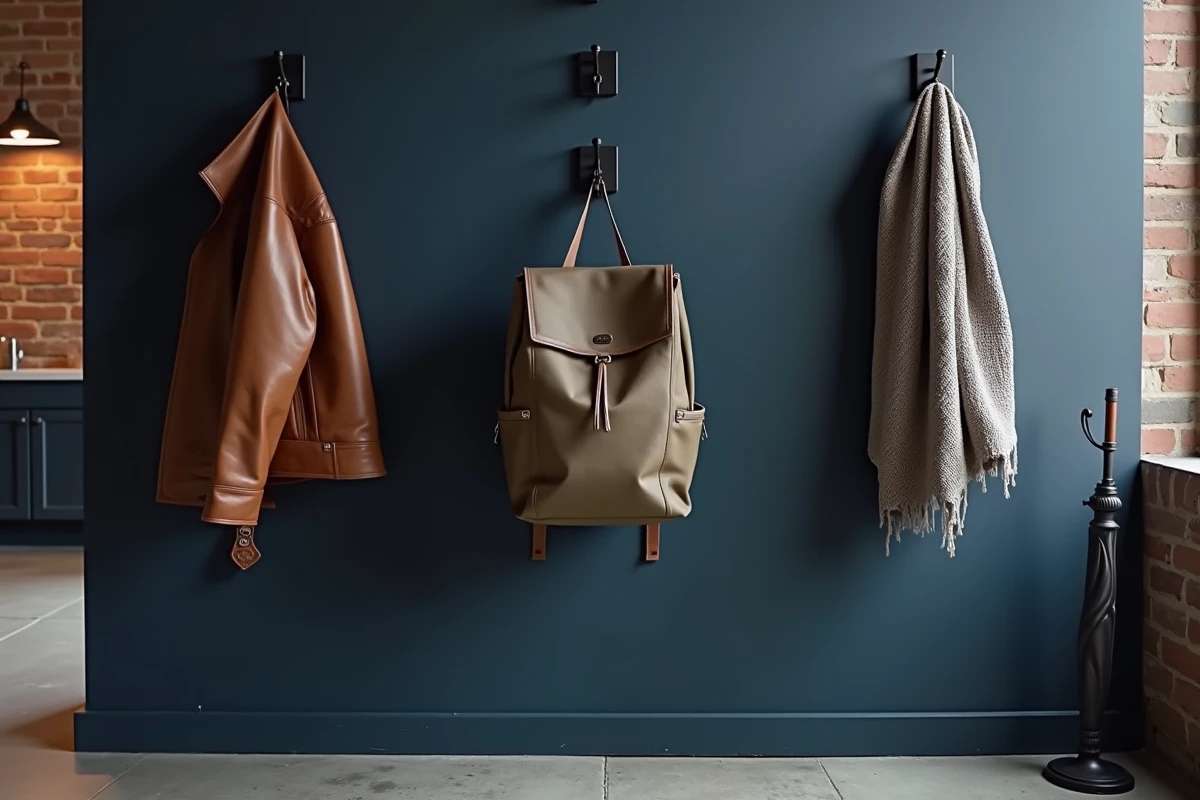
Matte black metal hooks, often made of aluminum cast or bent steel, provide a sharp contrast on a white or brick wall. Prefer models with visible plates and screws: the technical detail is part of the style.
Vintage or country ambiance
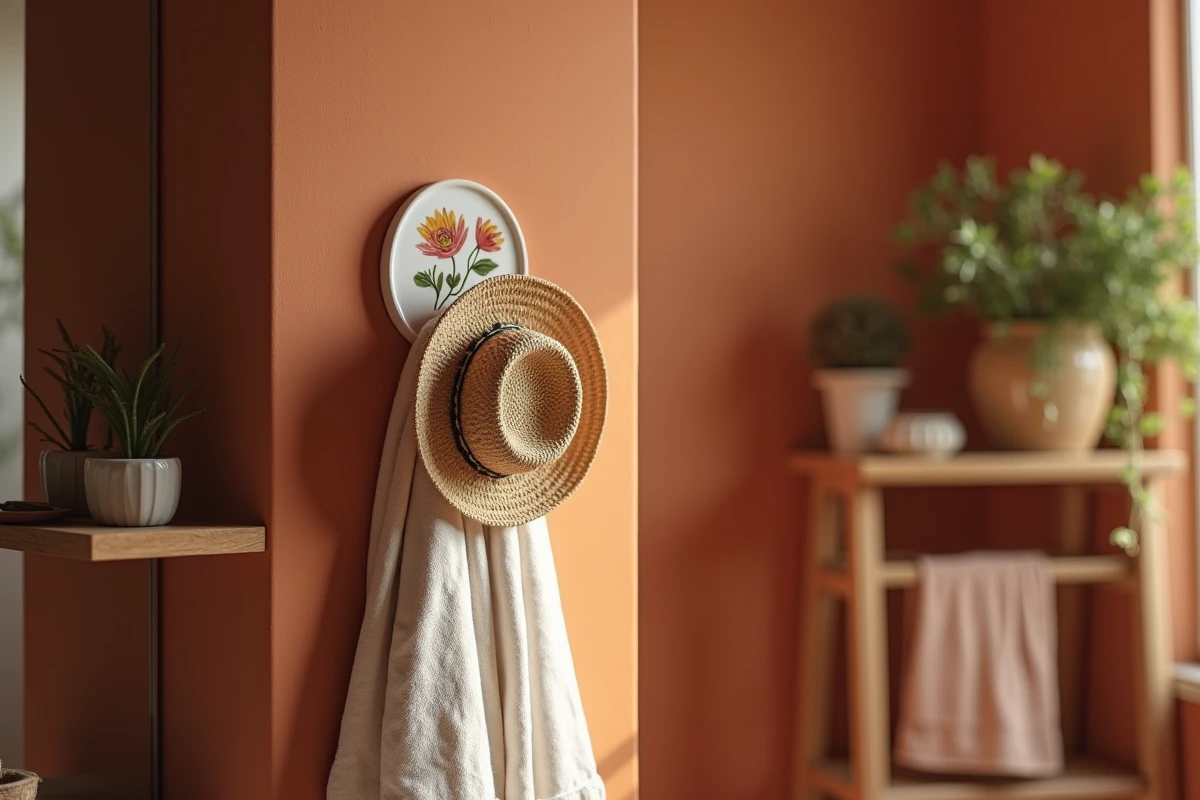
Antique brass hooks, painted ceramic, or turned wood match interiors rich in materials. A hook with a rounded end prevents damage to delicate clothing such as wool coats or lined jackets.
Safety of wall hooks in the presence of children
The recommendation “Designing Spaces for Young Children” from the Caisse nationale d’Assurance Maladie (updated 2021) reminds us that wall hooks at child height must have rounded ends and no protruding parts. This criterion, designed for nurseries and kindergartens, applies equally in a family home.
Ball models (wood or resin sphere at the end of the rod) meet this requirement without sacrificing load capacity. A sufficient ball diameter prevents clothing from slipping while eliminating the risk of facial injury for a standing child.
- Check for the absence of sharp edges on the mounting plate, especially on models made of laser-cut metal.
- Mount hooks accessible to children at an appropriate height (often between 90 and 110 cm) to encourage autonomy without the risk of pulling on an object that is too high.
- Prefer a through-screw mounting rather than adhesive: a child pulling on a coat exerts lateral force that a glue cannot support long-term.
Number of hooks and spacing: sizing according to the room
A single hook is suitable behind a bedroom door. A family entry requires at least four to six hanging points to accommodate coats, bags, and scarves without overlap.
Spacing hooks at least twelve centimeters apart prevents two thick coats from compressing and falling. Multi-hook bars often offer a fixed spacing that is too tight for winter clothing. Check this dimension before purchasing.
In a bathroom, two hooks are generally sufficient (one per main user). A third, placed lower, can hold a glove or shower cap. Adapting the number of hooks to the actual use of the room avoids visual clutter as well as the accumulation of objects.
The choice of a wall hook is based on a trade-off between the wall support, the material of the accessory, and the number of hooks needed. Mounting remains the most underestimated factor, yet it is the one that determines the durability of the installation. A well-sized and properly anchored hook serves for years without intervention.