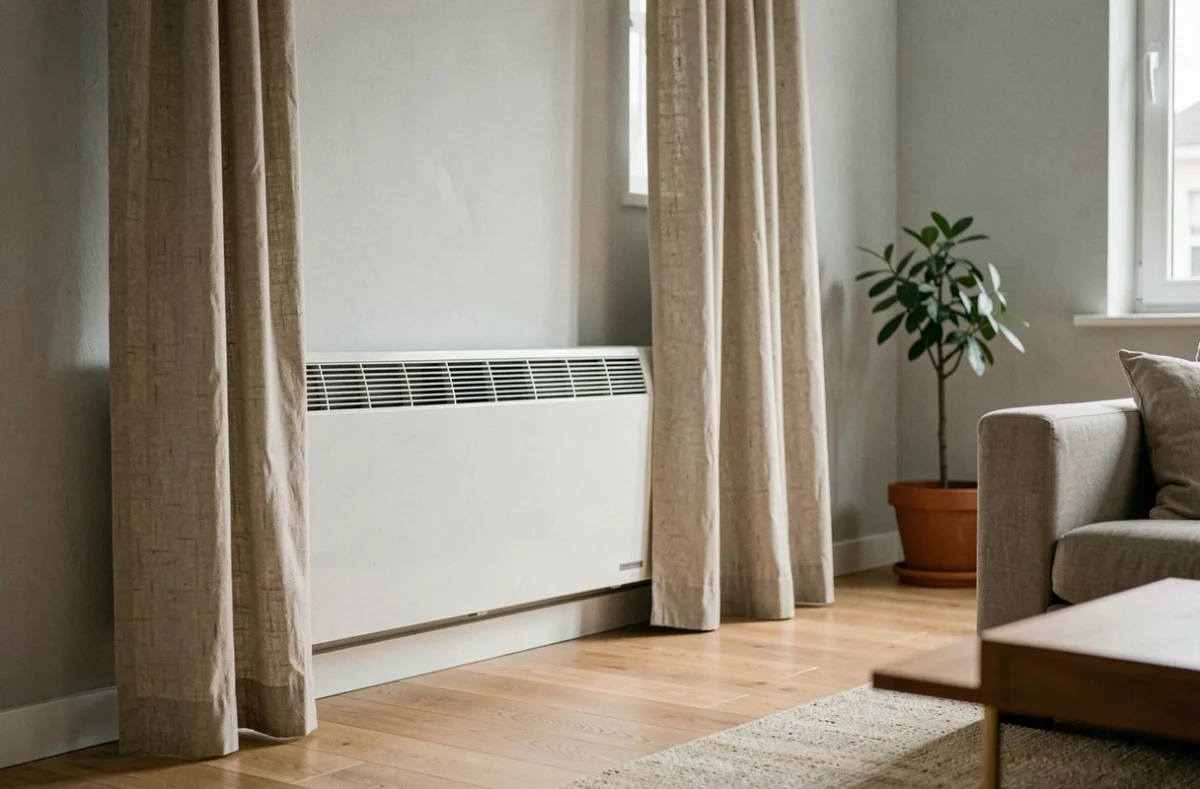
The electric radiator manual specifies the clearance distances around the appliance. Hanging a curtain above an electric radiator without consulting this document means ignoring the only reliable technical reference. Generic rules found online (“leave at least X centimeters”) do not account for the heating method, thermostat position, or appliance output.
Thermostat and control sensor: the risk décor guides overlook
A curtain hanging in front of or just above a radiator creates a pocket of hot air between the fabric and the wall. This localized overheating does more than affect heat distribution: it also skews the reading of the built-in thermostat.
The sensor then detects a higher temperature than the one felt in the center of the room. The radiator reduces its output or switches off prematurely. The result is reduced comfort even though energy consumption does not fall, because the appliance keeps cycling on and off for short periods.
This effect is particularly pronounced in appliances with built-in electronic controls, where the sensor is located high on the front panel. If the fabric partially covers this area, the reading can differ by several degrees from the actual room temperature. We recommend checking the sensor’s exact location in the manual before installing the curtain rod.
Installing a curtain above an electric radiator therefore means checking that the fabric, even when closed, never hangs in front of the top grille or the temperature sensor.
Electric radiator safety clearances: why no single measurement is enough
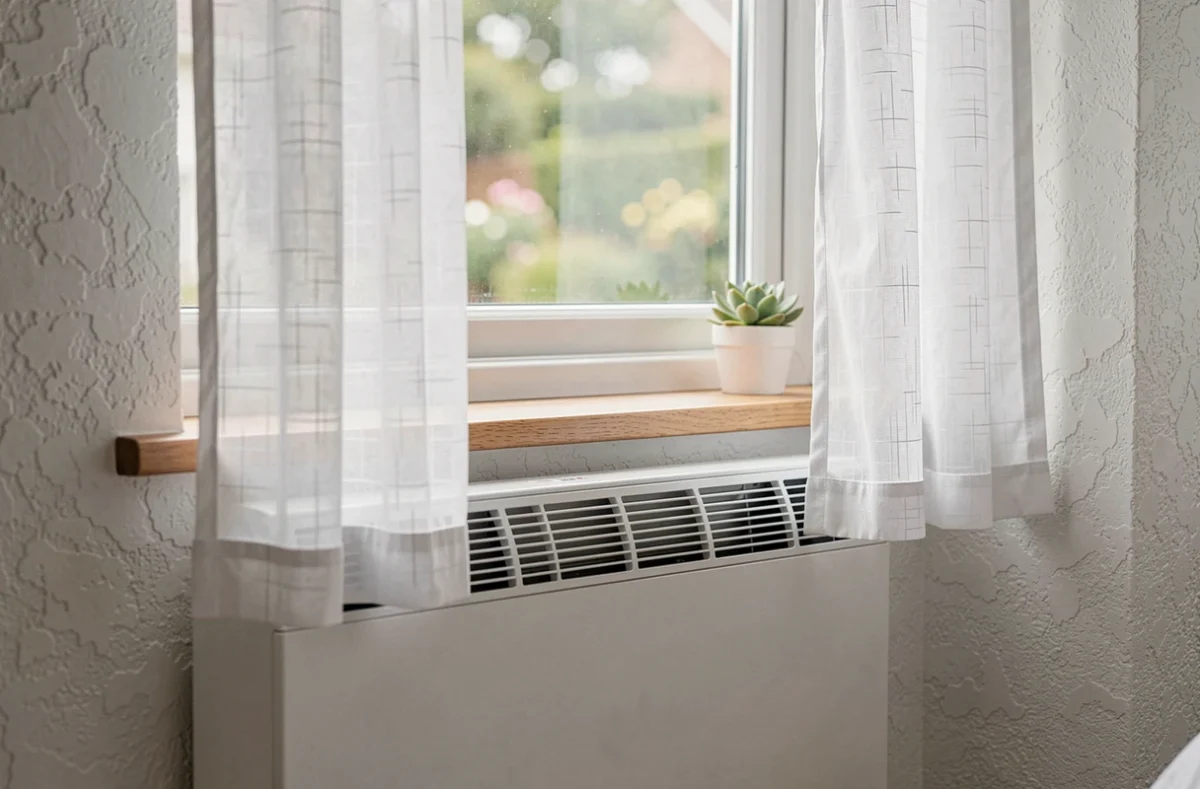
The Savoie Fire and Rescue Service (SDIS) and the French National Consumer Institute agree on one point: safety clearances depend on the model and are specified in the manufacturer’s manual. Applying the same fixed clearance to a convector, radiant panel, and thermal inertia radiator makes no technical sense.
Electric convector
Air enters through a lower grille, passes over a heating element, and exits through the upper grille. A curtain blocking the air outlet defeats the very principle of convection. The fabric heats up quickly because it is exposed directly to a flow of hot air. With this type of appliance, the curtain must never hang below the top edge of the casing, and the manual generally requires substantial vertical clearance.
Radiant panel
Heat is distributed by infrared radiation from the front panel. Fabric placed too close absorbs this radiation and heats up on the surface. The required clearance in front is often greater than for a convector, even if the panel surface remains moderately warm.
Thermal inertia radiator
The heating core (cast iron, ceramic, or fluid) warms up gradually. Its surface reaches temperatures that are less harsh on fibers, but side and top clearances are still essential to prevent heat from becoming trapped against the wall. A short curtain that ends well above the top of the appliance is the safest option.
Portable space heater
Safety recommendations for portable heaters are stricter: keep all combustible materials away, never cover the appliance, and do not plug it into a multi-outlet extension cord. A curtain should never be placed near a portable heater, regardless of its length.
Choosing fabric for use in front of a radiator: fire rating and thermal performance
The first thing to check is the fabric’s fire rating. Fabrics rated M1 (non-flammable) or M2 (low flammability) limit the risk of fire spreading if they accidentally touch a hot surface. Low-cost synthetic sheers, often rated M4, can melt or catch fire at low temperatures.
Beyond the fire rating, the fabric’s thermal performance also matters:
- Thick cotton or dense linen blocks more infrared radiation than a lightweight sheer, reducing heat distribution throughout the room while raising the temperature locally behind the curtain.
- Lightweight synthetic fibers (polyester, organza) let more radiation through but deform more quickly when exposed to prolonged heat.
- Fabrics with an aluminum coating, designed to insulate windows, trap heat between the curtain and the glass and worsen the hot-air pocket effect if there is a radiator below.
The most common compromise in renovation projects is a short sheer made from natural fibers, ending at the windowsill, paired with longer side panels kept open on either side of the radiator while the heating is on.
Curtain rod placement and mounting above a wall-mounted radiator
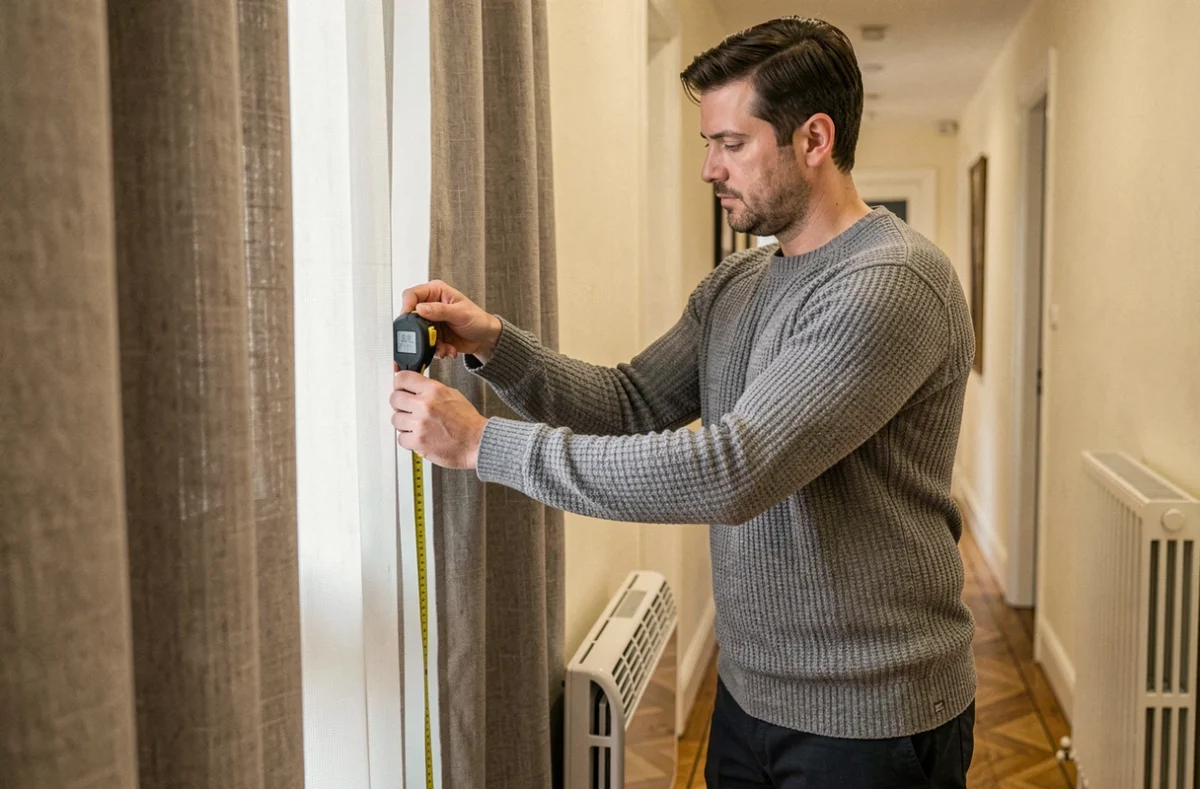
The curtain rod should be installed high enough and far enough from the wall to ensure that the curtain never touches the top of the radiator, even when affected by a draft. A rod with little projection presses the fabric against the wall and reduces ventilation space.
Two installation details deserve attention:
- The distance between the wall and the curtain rod: a projection at least as deep as the radiator prevents the curtain from falling onto the appliance when the window is open.
- The height of the rod relative to the top of the radiator: the higher it is, the shorter the curtain can be without leaving the window exposed, resolving the conflict between privacy and safety.
- Clip-on or articulated-arm brackets make it possible to pull the fabric to the sides during the day and fully clear the convection area.
On a narrow window where the radiator takes up almost the entire width of the sill, a roller blind mounted above the window frame is a better alternative to a traditional curtain. It eliminates any risk of contact and does not interfere with heat distribution when raised.
Choosing whether to hang a curtain in front of an electric radiator comes down to balancing window insulation, heat distribution, and fire safety. The manufacturer’s manual remains the definitive reference: it is the only document that specifies the minimum clearances approved for the installed model. If an installation makes it impossible to maintain these clearances, choose a different type of window covering.