
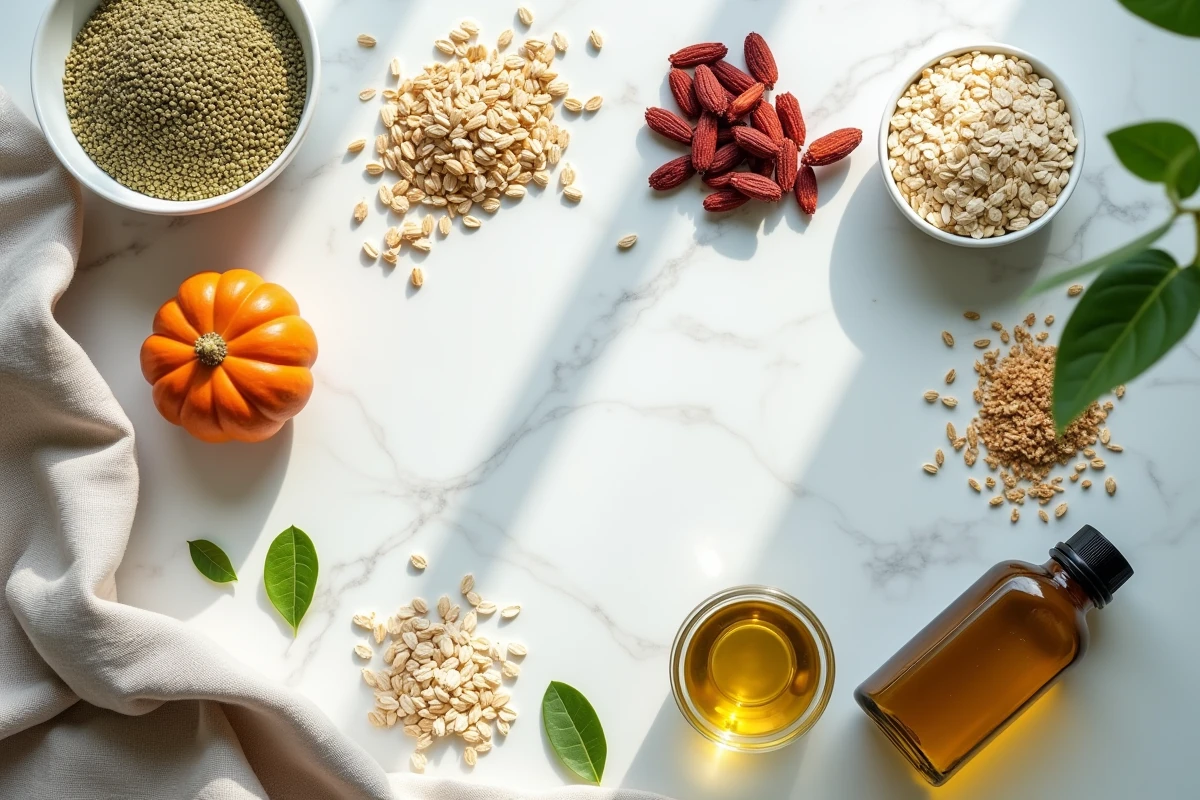
Proteins, fibers, fatty acids, micronutrients: seeds concentrate a nutritional density that few foods reach at equal weight. Comparing the nutritional profiles of the main organic seeds available on the French market allows us to measure what each handful actually provides and to identify the most relevant combinations for a healthy and tasty diet.
Nutritional profile of organic seeds: what labels don’t highlight
Most guides on organic food list seeds without ever comparing them to each other. The table below gathers the major families of seeds usable on a daily basis, classified by type of dominant nutrient.
| Seed Family | Dominant Nutrient | Specific Benefit | Limit to Know |
|---|---|---|---|
| Legumes (lentils, chickpeas, dry beans) | Plant proteins, fibers | Amino acid profile complementary to cereals | Low in methionine alone |
| Oily seeds (flax, sunflower, pumpkin, sesame) | Unsaturated fatty acids | Omega-3 (flax) or zinc (pumpkin) intake | High caloric density |
| Whole grains (quinoa, buckwheat, spelt) | Complex carbohydrates, fibers | Gradual energy, long-lasting satiety | Contain gluten (except buckwheat, quinoa) |
| Nuts (almonds, walnuts, hazelnuts) | Fats, vitamin E | High concentration of antioxidants | Common allergens |
ANSES explicitly recommends increasing the share of legumes and nuts in daily diets, both for nutritional quality and to reduce the environmental footprint of meals. INRAE confirms that the combination of whole grains, legumes, and oily seeds meets amino acid needs without resorting to ultra-processed products.
To explore a catalog of seeds and organic products selected according to these criteria, a useful resource: https://laptitegraine.fr/.
Combinations of organic seeds and protein complementarity in meals
Consuming lentils alone or brown rice alone does not provide a complete amino acid profile. Legumes lack methionine, and grains lack lysine. Combining the two in the same meal corrects this imbalance and produces a protein intake comparable to that of an animal source.
This principle of complementarity, validated by ANSES, translates into concrete associations:
- Red lentils and brown basmati rice: the most common base, with a balanced lysine/methionine ratio and quick cooking.
- Chickpeas and spelt semolina: a Mediterranean variant rich in fiber, suitable for warm salads or vegetable couscous.
- Red beans and quinoa: quinoa already contains all eight amino acids, making it a nutritional safety net in the mix.
- Pumpkin seeds and buckwheat: a lesser-known combination that provides zinc and magnesium in addition to plant proteins.
These combinations require neither dietary supplements nor protein powders. They fit into simple recipes (soups, bowls, patties) and allow for a reduction in animal protein without losing nutritional value.
The common mistake: compensating with processed organic products
Vegetable steaks, pea nuggets, industrial patties bearing the organic label: these products often have a long list of ingredients, with added texturizers and flavors. The organic label guarantees the absence of synthetic pesticides, not the simplicity of the recipe.
Favoring raw or simply processed seeds (flours, flakes, nut purees without additives) allows for better control over the meal’s composition. Regulation (EU) 2018/848, in effect since 2022, strengthens traceability and controls on pesticide residues in organic products, including seeds. However, it does not regulate the complexity of labeled industrial recipes.
Environmental impact of organic seeds compared to animal proteins
The nutritional argument alone is not enough to explain the growing interest in organic seeds. INRAE documents a marked gap between the environmental footprint of plant proteins and that of animal proteins, whether in greenhouse gas emissions, water consumption, or agricultural land used.
Legumes have an additional advantage: they fix atmospheric nitrogen in the soil, which reduces the need for synthetic nitrogen fertilizers for subsequent crops. In organic production, this property is utilized in crop rotations to maintain soil fertility without chemical inputs.
Seasonality and short supply chain for French organic seeds
Unlike fresh fruits and vegetables, most dried seeds can be stored for several months without significant nutritional loss. Green lentils from Puy, chickpeas from the Southwest, flax grown in the North: French production of organic seeds covers a wide range of needs without relying on long import supply chains.
Buying in bulk from local producers or through organic cooperatives reduces both unit cost and carbon footprint related to transport. The DGCCRF notes that the strengthened framework of Regulation (EU) 2018/848 now imposes stricter controls on mixtures of organic and non-organic lots, which enhances the reliability of labeling for consumers.
Organic seeds in daily life: three typical meals to vary intake
Moving from theory to the plate requires concrete examples. Here are three typical meals that illustrate the possible diversity:
- Breakfast: buckwheat flakes porridge with ground flaxseeds, almond butter, and seasonal fruits. Provides omega-3, soluble fibers, and slow energy.
- Lunch: warm salad of green lentils, quinoa, roasted pumpkin seeds, and seasonal roasted vegetables. Complete proteins, zinc, non-heme iron.
- Dinner: thick split pea soup with whole spelt bread croutons and sesame seeds. Light meal, rich in fibers and plant proteins.
Each meal combines at least two families of seeds. This diversity ensures a broad spectrum of micronutrients and avoids the taste monotony often cited as a major barrier to a sustainable plant-based diet.
The transition to a diet rich in organic seeds does not rely on a radical change but on a logic of gradual substitution. Replacing one meat meal per week with a well-thought-out grain-legume combination already modifies the nutritional balance and environmental footprint of the food basket. The quality of the result depends less on the budget than on mastering the combinations.