A trike built in a workshop from a Volkswagen block and a front end from a Goldwing cannot legally drive anywhere in France until it has passed the individual approval process. The procedure exists, it works, but it relies on a precise technical file and tests that the DREAL does not validate lightly. Here’s how to proceed concretely, step by step.
Transformation or artisanal construction: the DREAL does not treat the two cases the same way
Before compiling any file, we must determine which category the trike falls into. An internal methodological guide from DREAL updated in 2024 distinguishes two situations.
If the trike retains the serial number (VIN) and structural elements of a series motorcycle, it is classified as a transformed vehicle. The level of requirements remains significant, but the approved base simplifies certain checks.
If the trike is built from scratch, without an approved base, it falls into the category of artisanal construction vehicle. The DREAL then requires structural calculations, additional tests, and a significantly heavier file. Confusing the two categories at the time of submission means leaving with a refusal and several weeks of delay.
In practice, most French trikes start from a motorcycle base (Goldwing, Harley, flat engine) with a reconstructed rear end. We therefore remain in the individual approval procedure for transformed vehicles, which goes through the DREAL of the region where the vehicle is registered. To obtain the approval for a trike without unpleasant surprises, this initial distinction conditions everything else.

Technical file for the DREAL: what to gather before submission
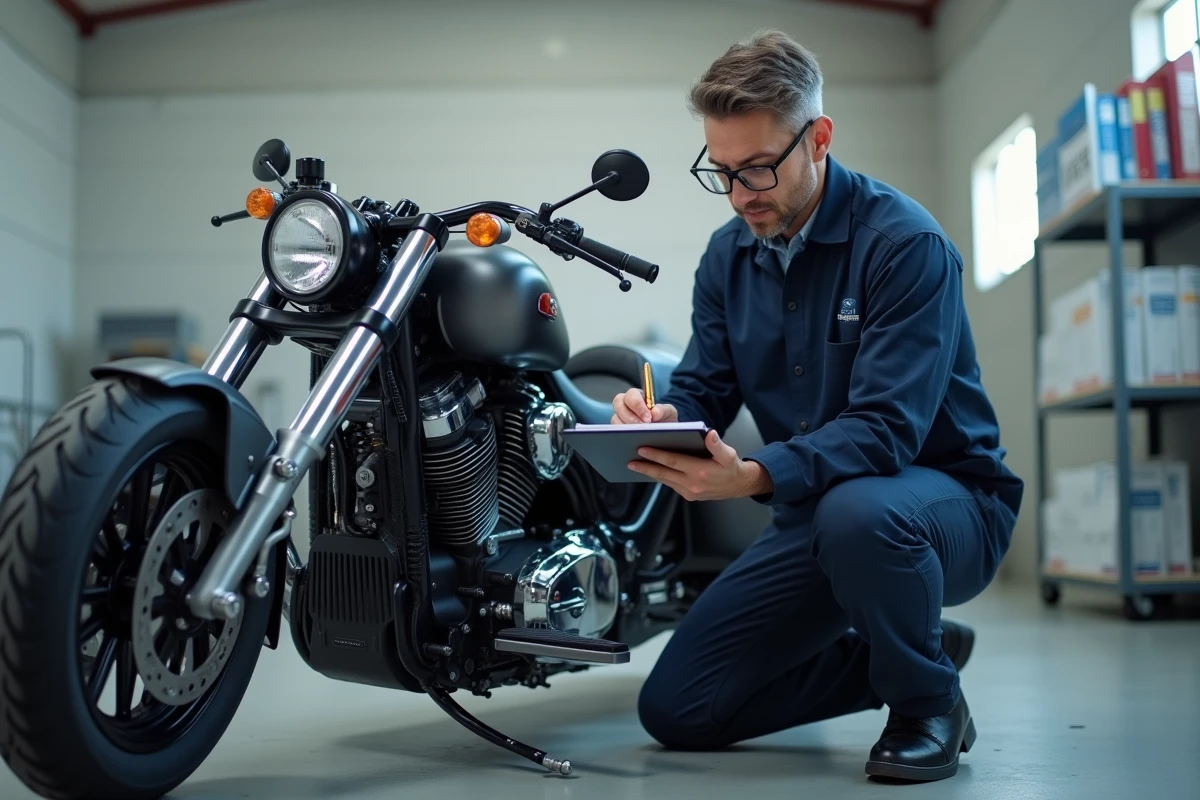
Compiling the file is the most time-consuming part. We are not talking about a simple form: the DREAL expects a set of documents that prove that the vehicle meets applicable safety and emissions requirements.
- The application form for individual approval, available from the regional DREAL, filled out with the complete technical characteristics of the trike (dimensions, empty weight, wheelbase, rear track, engine).
- Proof of origin for the main components: invoice for the engine, certificate of conformity for the donor motorcycle if it still exists, traceability of the chassis or frame.
- An illustrated descriptive file (photos, dimensioned diagrams, structural plans) showing the modifications made compared to the original base, or the complete design for artisanal construction.
- Test reports or certificates of conformity with technical regulations: braking, lighting, exhaust, noise level. For emissions, the applicable directive depends on the targeted category (L5e for a trike with a thermal engine).
- An insurance certificate and, in some cases, a prior technical inspection depending on the condition of the vehicle.
Each regional DREAL may have slightly different documentary requirements. Contacting the reception service of the relevant DREAL before submitting the file avoids providing documents in the wrong format or forgetting a proof that blocks the processing.
Braking and stability tests: the tough point for atypical trikes
A trike with a short wheelbase or narrow track does not pass approval based solely on documents. Feedback from the DREAL Auvergne-Rhône-Alpes and Grand Est in recent times shows an increased requirement for dynamic tests for trikes exceeding certain weight/power ratios.
Specifically, we are talking about emergency braking tests, straight-line stability, and cornering stability. For geometries deemed atypical, the DREAL may impose demonstrations on a track or closed road. This is not systematic, but the trend clearly goes in this direction.
Anticipate tests from the design stage
Adapting the geometry of the rear end to pass these tests afterward can be costly. Time is saved by sizing the track, wheelbase, and braking system according to the expected stability criteria, rather than hoping that the DREAL will overlook borderline road behavior.
Feedback varies on this point by region, but a well-designed trike mechanically passes the tests without major difficulty. The problem arises when the construction prioritizes aesthetics or budget over geometry.
After DREAL approval: registration and driver’s license
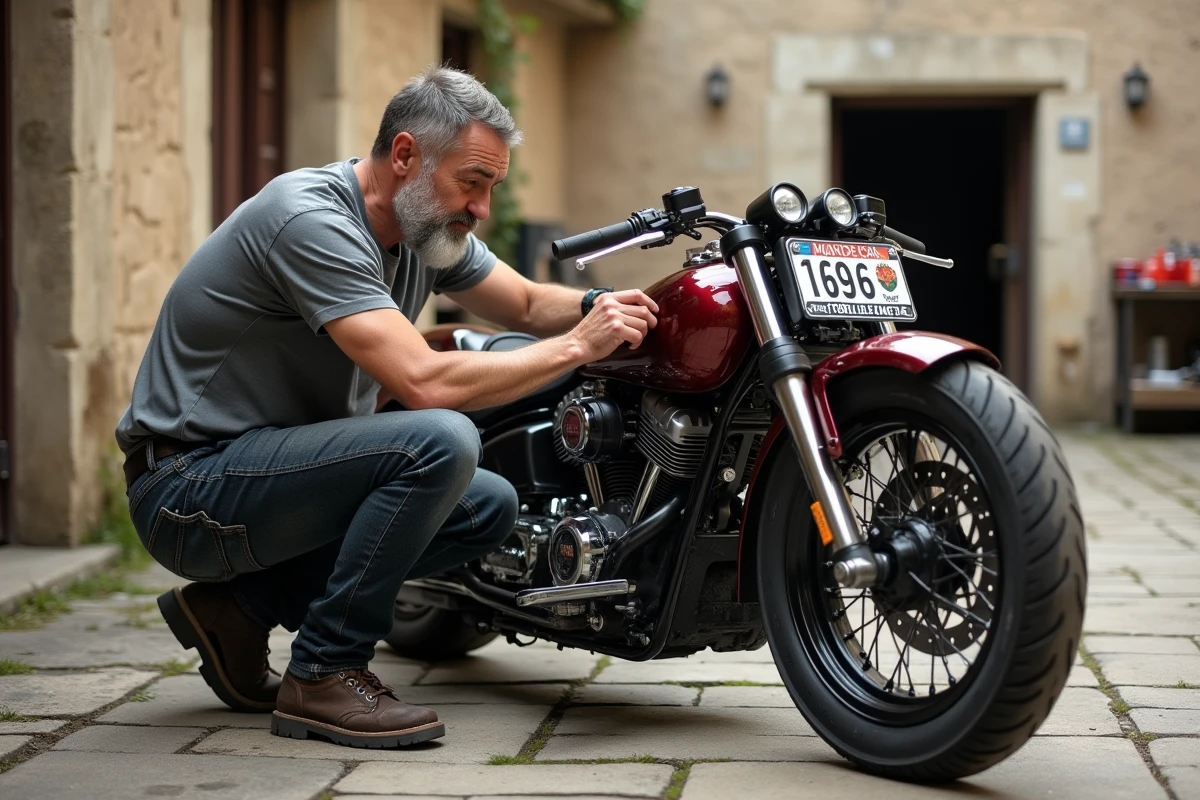
Once the individual approval report is obtained, the trike receives an approval number that allows for the request of the registration certificate. The request is made via the ANTS website or through an authorized professional.
Regarding the license, French regulations require either an A license or a B license held for more than two years with a seven-hour training. Drivers who obtained their B license after January 19, 2013 must also be over 21 years old. Those who can prove they have ridden a light motorcycle or a three-wheeler between January 1, 2006, and December 31, 2010, are exempt from training, upon presentation of an insurance information statement.
A often overlooked point: transformation kits with stabilizers (made notably in Portugal, which retain the rear wheel of the motorcycle) are strictly prohibited in France. The modified vehicle does not correspond to any category of the regulation for two, three, and four wheels. It is neither approved nor eligible for approval, and driving with it exposes one to a fine and vehicle immobilization.
The complete procedure, from the first DREAL contact to having the registration certificate in hand, generally takes several months. The timeframe depends on the quality of the initial file and the workload of the regional DREAL. Assembling a complete file from the start, with all the proofs and test reports, remains the only real lever to shorten this wait.