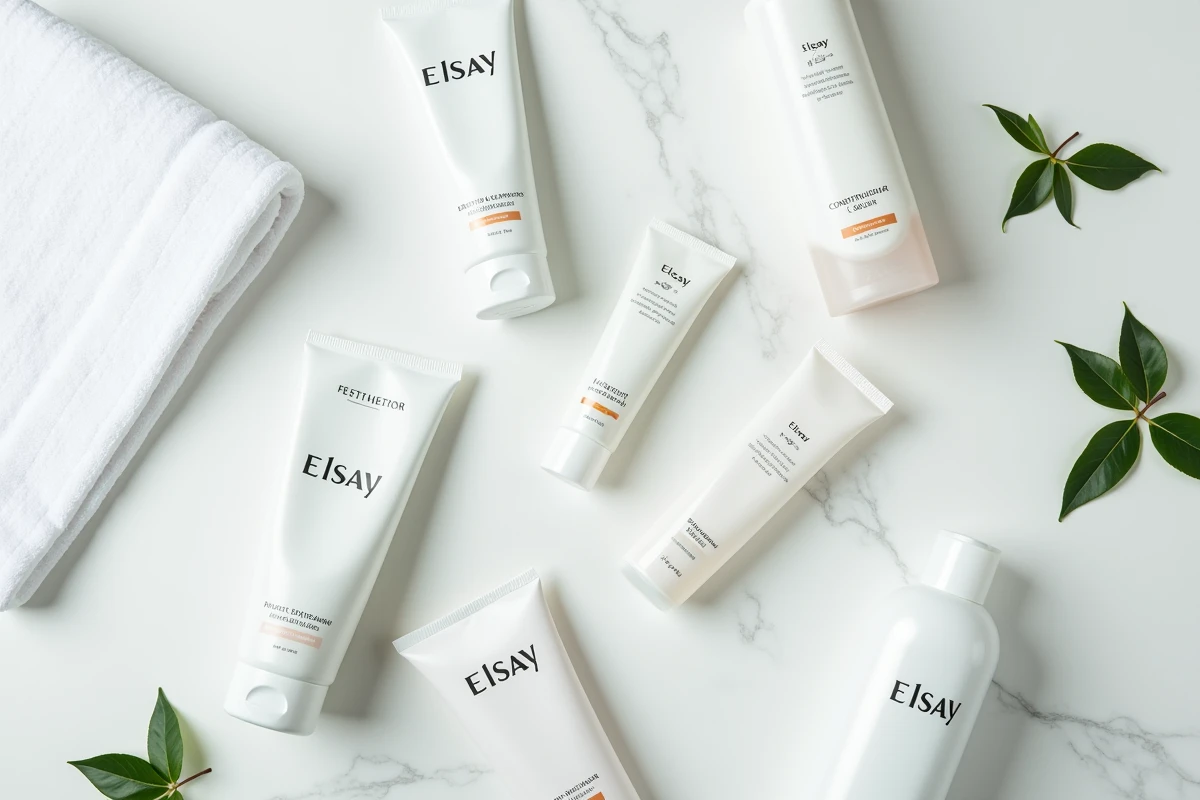
Elsay is the private label brand of E.Leclerc dedicated to household appliances. Present across dozens of references ranging from small kitchen gadgets to washing machines, it offers some of the lowest prices in the aisle. Behind this aggressive pricing strategy lies a recurring question: who actually manufactures these devices, and how do they perform in use?
Who manufactures the Elsay appliances sold at E.Leclerc
Elsay has neither factories nor research offices. The brand operates under a classic private label model (MDD): E.Leclerc defines a specifications document, then entrusts production to third-party manufacturers, often referred to as OEMs.
The manufacturers identified on the nameplates of Elsay products are Vestel, Hisense, Midea, and Beko. These groups also produce for other private labels like Valberg, High One, or Essentiel B (Boulanger). An Elsay refrigerator and a Valberg refrigerator can therefore come off the same assembly line, with cosmetic adjustments and a level of finish tailored to the target price.
This operation explains why some Elsay products are satisfactory while others disappoint. Quality depends less on the logo affixed than on the actual manufacturer and the specifications negotiated for each reference. An oven produced by Midea will not have the same profile as a vacuum cleaner produced on another line. To consult a detailed review of the Elsay brand at Leclerc categorized by product type, cross-referencing user feedback remains the most reliable reflex.
Elsay Pricing Strategy: What the Lowest Price in the Aisle Implies
Elsay is explicitly calibrated to occupy the cheapest segment in the aisle. This is not a “good value for money” positioning in the usual sense. It is a floor price logic embraced by E.Leclerc, with direct consequences on product design.
To achieve these prices, compromises are made on several fronts:
- Materials (more plastic, less stainless steel or tempered glass on cooking models)
- Energy consumption, sometimes less optimized than on higher-end ranges from the same OEM
- Mechanical longevity, particularly on wear parts (seals, kitchen robot motors, vacuum filters)
Recurring promotional operations reinforce this perception of cut prices. E.Leclerc regularly offers days with an immediate advantage across the entire Elsay range, further lowering an already tight price.
The trap would be to compare an Elsay price with that of a national brand without considering these compromises. An inexpensive Elsay kitchen robot and a Moulinex or Kenwood robot do not operate in the same durability or motor power category. The low price is not a flaw in itself, but it should not obscure the technical trade-offs.
Consumer Reviews on Elsay: What Emerges from Field Feedback
Feedback on Elsay products is scattered across product pages on the E.Leclerc site, forums, and social media. No centralized platform gathers all the reviews, making overall assessment difficult.
Several trends emerge nonetheless. Simple devices (kettle, toaster, iron) receive predominantly positive reviews. Satisfaction levels drop for more complex or daily-use devices: washing machines, kitchen robots, vacuums.
Frequent Satisfaction Points
- Very accessible purchase price for a first appliance or occasional use
- Sober design that easily integrates into a kitchen or laundry room
- Basic functionalities adequately fulfilled on small appliances
Recurring Friction Points
- Perceived limited lifespan beyond two to three years on large appliances
- Spare parts sometimes difficult to find after a few years
- Summary user manual on certain models (kitchen robot, vacuum sealer)
Field feedback varies significantly by product category. Drawing a single conclusion about “Elsay quality” makes little sense. An inexpensive toaster does not have the same reliability requirements as a washing machine used five times a week.

Elsay Warranty and Customer Service at E.Leclerc: What to Check Before Purchase
The legal warranty of conformity covers Elsay products like any appliance sold in France. In practice, customer service goes through the E.Leclerc store where the purchase was made, which can vary from one outlet to another in terms of responsiveness.
The sensitive point concerns the availability of spare parts in the long term. National brands like Bosch, Whirlpool, or Moulinex maintain a catalog of parts for several years after a model is discontinued. For a private label like Elsay, this duration of availability is less predictable, as it depends on the stock negotiated with the OEM at the time of launch.
Before purchasing an Elsay appliance intended for intensive use (oven, washing machine, dryer), it is wise to check if the store offers an extended warranty and which parts are referenced for routine maintenance. For a low-cost small appliance, this question is less pressing: in case of failure, replacement often costs less than repair.
Elsay or National Brand: In Which Cases the Choice is Justified
Elsay finds its relevance in specific situations. A student equipping their first studio, a landlord furnishing a seasonal rental, or a household needing a backup appliance used a few times a month: in these cases, paying the price of a national brand is not justified.
On the other hand, for an appliance used daily and expected to last more than five years (washing machine, refrigerator, main vacuum), the available data does not allow for a conclusion that Elsay competes with the mid-range offerings of Beko or Hisense sold under their own name, even though these manufacturers produce for Elsay. The private label specifications are often behind the manufacturer’s own catalog.
The right approach is to reason by use and frequency, not by brand. A well-targeted Elsay product for a specific need remains a rational purchase. Expecting an Elsay washing machine to have the same endurance as a Bosch model would, however, ignore the design trade-offs imposed by the pricing strategy.