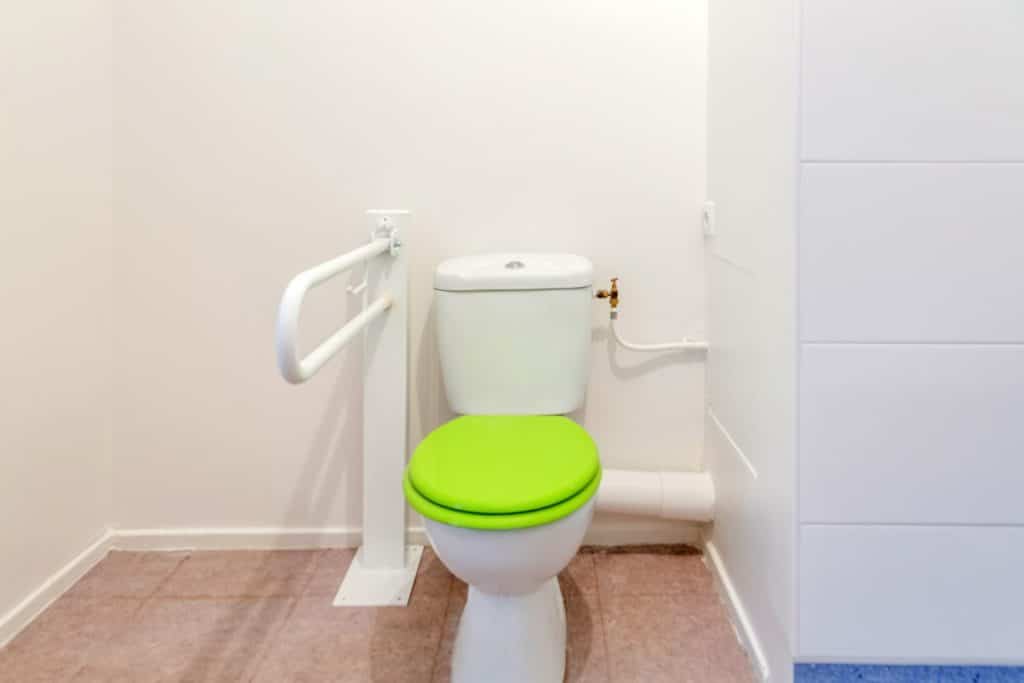
Some companies place importance on the presence of accessible toilets for people with reduced mobility (PMR) in their premises. Compliance with this standard in businesses is not yet widespread. However, this standard aims to ensure a certain level of comfort for individuals with reduced mobility when using the toilets. What are the principles of the PMR toilet standard? Explanations.
Easy identification
It’s no longer enough to just have toilets in businesses. It is important to provide toilets that comply with the PMR toilet standard; this is essential. This standard primarily aims to ensure easy access to toilets for people with disabilities. For those with reduced mobility, it is necessary that the toilets are easily recognizable. Thus, according to this standard, all information regarding the toilets must be readable and visible both when seated and standing.
This allows a wheelchair user to read and quickly locate the toilets. It is important that the signage is respected. Similarly, visually impaired individuals are also taken into account. It is required to translate the information regarding these toilets into braille. A height of 4.5 mm is the authorized size for the characters.
Accessibility
Once these toilets are identified, it is important that individuals with disabilities can access them without hindrance. The access path must be clear.
The entrance door to the toilets must open outward and leave a passage space of at least 0.85 cm. With this dimension, wheelchairs can easily enter the toilets. The door must have a lock on the inside. This locking system must be accessible whether one is sitting or standing.
From inside the toilets, it is important to have a free space of at least 1.50 meters in diameter. This is to ensure mobility and a 360-degree rotation for wheelchairs. No object or device in the toilets should obstruct this rotation.
The mirror, hand dryers, and other accessory equipment should also not be located more than 1.30 meters from the floor.
A comfortable bowl
The toilet bowl must be accessible to individuals with reduced mobility without requiring any assistance. That is why the bowls must be positioned between 40 cm and 50 cm from the floor. There are even adjustable bowls based on the user.
The bowl should also be equipped with a curved grab bar or a lateral support bar. This bar can be placed on either side of the bowl or on just one side. It should be positioned at a height of 80 cm and, importantly, 20 cm above the bowl.
This bar serves to facilitate the transfer from the bowl to the wheelchair for individuals using wheelchairs. It must be sturdy enough to support the weight.
The sinks
Just like the bowls and toilet accessories, individuals with reduced mobility should also be able to use the sink. This equipment is also installed according to standards that ensure its accessibility and use. For example, the height of the sink must not exceed 70 cm. The width of the sink should be 60 cm. The depth is limited to 40 cm to facilitate the passage of legs under the device.