Food enthusiasts know it well: recipes can sometimes become a puzzle when it comes to converting volumes. A pinch here, a cup there, and everything gets tangled. To simplify life in the kitchen, mastering a few conversion tips is essential.
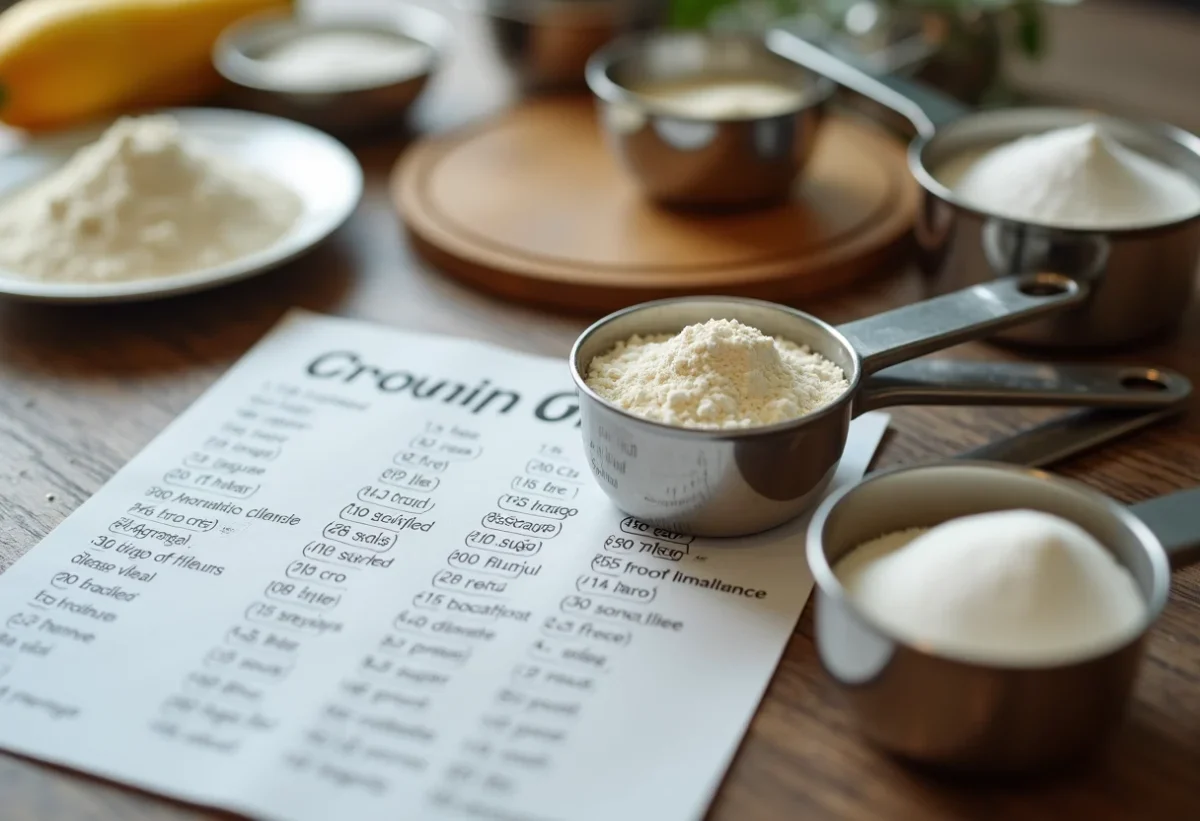
For example, did you know that one cup is approximately 240 milliliters, and one tablespoon is 15 milliliters? These small conversions can turn a complicated recipe into a piece of cake. Keeping a conversion chart handy can also prove to be very useful.
With these simple tools, goodbye mistakes and hello perfectly successful dishes every time!
The Fundamentals of Volume Conversion in Cooking
In the culinary world, the precision of measurements is crucial to ensure the success of a recipe. Mastering volume conversions helps avoid unfortunate approximations. The key lies in understanding the equivalences between different units of measurement. For example, converting 300 ml to liters is equivalent to 0.3 liters, an essential piece of information for adjusting quantities according to needs.
The essential tools for precise conversions are numerous: the kitchen scale, measuring cup, teaspoon, and tablespoon. These instruments allow for accurate measurement of the necessary ingredients. For those who prefer digital methods, several online converters make these operations easier. The kitchen scale, for example, is an indispensable tool for weighing ingredients with precision down to the gram.
- 1 tablespoon = 15 ml
- 1 teaspoon = 5 ml
- 1 cup = 240 ml
The Food and Agriculture Organization of the United Nations provides a database of approximate apparent volumetric masses. This resource is valuable for converting volume to mass and vice versa, depending on the different ingredients. For example, 100 g of powdered sugar yields about 179 ml. This precision is fundamental for the consistency of culinary results.
Converters for volumes are valuable tools. They allow for converting milliliters to liters, deciliters, or centiliters, as well as volumes into tablespoons or teaspoons. 30 ml is equivalent to 0.03 liters, 0.3 deciliters, 3 centiliters, 2 tablespoons, or 6 teaspoons. These equivalences ensure accurate measurement and better recipe adaptation.
Tips and Techniques for Precise and Effective Conversions
Volume conversion in cooking requires not only a good understanding of units of measurement but also appropriate tools and techniques. To avoid errors, use a volume/mass converter by ingredient. This tool converts volume to mass and vice versa, according to the specifics of the ingredients. For example, 100 g of powdered sugar is equivalent to about 179 ml.
For liquid volumes, a volume converter is essential. It allows for converting milliliters to liters, deciliters, centiliters, tablespoons, and teaspoons. Here are some equivalences to help you out:
- 30 ml = 0.03 l, 0.3 dl, 3 cl, 2 tbsp, 6 tsp.
The precision of cooking temperatures is also fundamental. Use a oven temperature converter to switch from thermostat settings to degrees Celsius or Fahrenheit. For example, a thermostat 3 corresponds to 90°C and 194°F. This technique allows you to adapt your recipes with great precision.
Another tip is to have a conversion chart handy in your kitchen. This chart can include the most common conversions and save you time. Here’s an example of a useful chart:
| Units | Equivalences |
|---|---|
| 1 liter (l) | 1000 milliliters (ml) |
| 1 deciliter (dl) | 100 milliliters (ml) |
| 1 centiliter (cl) | 10 milliliters (ml) |
Using a kitchen scale and measuring cups ensures precise measurement of ingredients. Adopting these techniques and tips will guarantee consistent and impeccable culinary results.