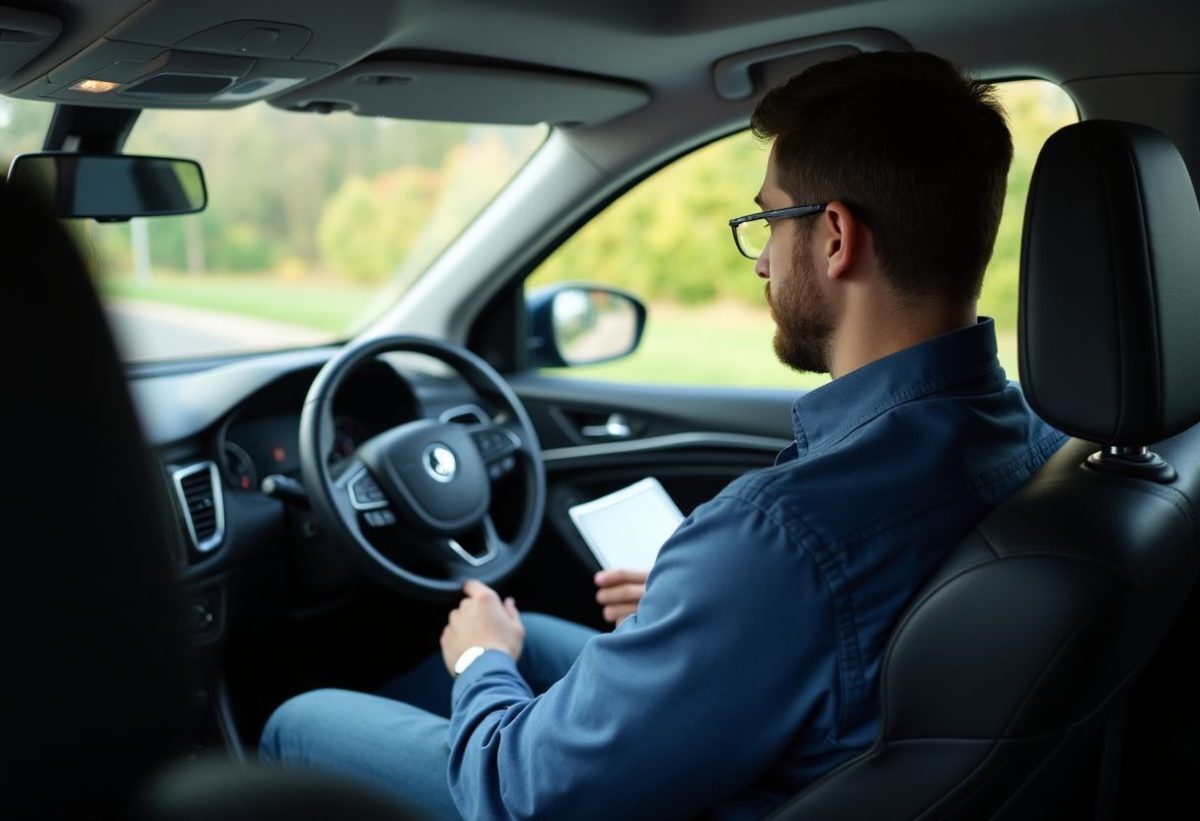
Obtaining a driver’s license is a significant milestone in the lives of many individuals. However, the road to this independence can involve much more than simply mastering the vehicle. For some, it is mandatory to undergo a psychotechnical test for the license. This type of evaluation is often overlooked but is crucial for ensuring safe behavior on the road. This process assesses not only cognitive abilities but also the psychomotor skills necessary for driving safely. Let’s start by exploring the reasons why this test is essential and the situations in which it becomes mandatory.
What is a psychotechnical test for a driver’s license?
The psychotechnical test for a driver’s license is a standardized evaluation aimed at analyzing an individual’s mental and motor skills. It is not merely a theoretical test but a series of exercises that measure various competencies.
- Reflex assessment: The tests measure the speed and effectiveness of reflexes, crucial for avoiding accidents.
- Hand-eye coordination: Precise coordination is essential for managing the vehicle’s controls.
- Concentration ability: Sustained concentration is vital for driving safely over long distances.
In summary, these tests are designed to ensure that every driver possesses the necessary skills to react appropriately to the dynamic conditions of driving.
When should one take a psychotechnical test?
Several situations may require the completion of a psychotechnical test for a driver’s license. This test is imposed not only to evaluate drivers in specific situations but also to ensure that the roads remain safe for all users.
Here are some common circumstances where the test is required:
- License cancellation for serious offenses
- Suspension due to accumulation of points
- Medical reasons or at the request of a doctor after a health incident
- Road professionals whose activity requires regular assessment of skills
In these contexts, the test ensures that the individual is fit to resume driving safely.
The components of the psychotechnical test
The psychotechnical test generally consists of several distinct sections, each evaluating a specific aspect of driving skills. It is essential to understand these components to better prepare and optimize one’s chances of success.
Here is a detailed description of the main sections:
Memory tests: These exercises aim to assess the driver’s ability to retain and recall crucial information. Whether it’s remembering traffic signs or navigation instructions, good memory is essential on the road.
Logic tests: The goal here is to analyze the candidate’s reasoning ability. By confronting the driver with logical problems, their capacity to make quick and effective decisions, often under stress, is evaluated.
Psychomotor exercises: These tests assess coordination and reflexes. Good psychomotor coordination is vital for performing complex maneuvers while maintaining smooth and safe driving.
Preparing for the test: how to optimize your chances of success
Preparing for the psychotechnical test for the license can make the difference between success and failure. Adopting a proactive approach can greatly improve results. Here are some tips for effective preparation:
- Practice logic and memory exercises daily to train the brain for these types of tasks.
- Participate in online simulations that replicate test conditions to familiarize yourself with the format.
- Consult specialized professionals who offer intensive preparation sessions.
- Adopt a healthy lifestyle including good nutrition and rest to optimize cognitive and motor performance.
By following these recommendations, candidates significantly increase their chances of successfully passing the psychotechnical evaluation.